
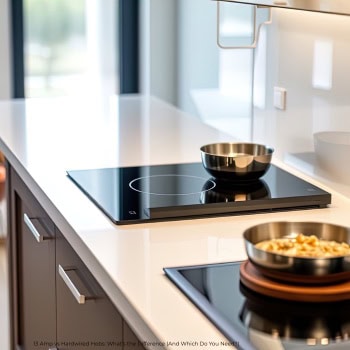
13 Amp vs Hardwired Hobs. Not sure if your new hob needs plugging in or hardwiring? You’re not alone.
The most common questions we hear in appliance showrooms are:
“13 Amp vs Hardwired Hobs: What’s the Difference?” and Can this hob just plug into a socket — or does it need to be hardwired?”
If you’re planning a new kitchen, replacing an old hob, or switching from gas to electric or induction, understanding this difference is essential. Choosing the wrong type can mean unexpected electrical work, extra costs, or installation delays.
So here’s the clear, simple explanation — no electrician jargon required.
Prefer to watch instead of read?
Nick has put together a quick video explaining the difference between 13 amp plug-in hobs and hardwired hobs — and which one you might need in your kitchen.
What is a 13 Amp hob?
A 13 amp hob is designed to plug directly into a standard UK socket — just like a kettle or toaster.
These hobs:
- Have a lower maximum power output
- Are commonly found in smaller induction or ceramic models
- Can be installed without specialist wiring
- Are ideal where upgrading electrics isn’t practical
They’re popular in:
- Flats and apartments
- Rental properties
- Smaller kitchens
- Straightforward replacement projects
If convenience and minimal installation work are your priority, a 13 amp hob is often the easiest route.
What is a hardwired hob?
A hardwired hob connects directly into a dedicated cooker circuit, installed by a qualified electrician.
These hobs:
- Deliver higher power output
- Heat faster and more consistently
- Allow multiple zones to run at full power
- Are standard in most modern kitchen installations
They’re best suited for:
- Full kitchen renovations
- Larger households
- Keen home cooks
- Future-proof kitchen upgrades
While installation requires an electrician, many homeowners choose hardwired models for better performance and long-term flexibility.
Why does power output matter?
Higher-powered hobs:
- Boil water faster
- Maintain steady cooking temperatures
- Let you use several cooking zones at once
- Reduce overall cooking time
Lower-powered plug-in models:
- Are simpler to install
- But may limit how many zones can run simultaneously at full power
Neither option is “better” — it simply depends on how you cook and your home’s electrical setup.
Can I switch from a 13 Amp hob to a hardwired hob?
Yes — but you’ll need:
- A dedicated cooker circuit installed
- A qualified electrician
- Suitable capacity in your consumer unit
If you’re planning a kitchen renovation, many customers choose to install a cooker circuit at the same time — making the process simpler and more cost-effective.
Which should you choose? A quick guide
Choose a 13 amp hob if:
- You want the simplest installation
- You’re replacing an existing plug-in hob
- You live in a flat or rental property
- You want to avoid electrical work
Choose a hardwired hob if:
- You’re upgrading your kitchen
- You cook regularly using multiple zones
- You want faster heating performance
- You’re planning long-term
Still unsure? Ask before you buy
The good news?
You don’t need to figure this out alone.
In-store, our team helps customers:
- Choose the right hob for their kitchen
- Check installation requirements
- Arrange delivery and installation
- Avoid costly surprises later
A quick conversation before ordering can save time, money and frustration.
Explore hobs in-store
Visit the Ruislip Appliances showroom in Ruislip Manor to see induction, ceramic and electric hobs in person — and get clear advice before you buy.
📍112-116 PEMBROKE ROAD, RUISLIP, HA4 8NW
Or Shop Online
Read More from The Appliance Blog